
Updated June 2026
Drag clicking is a strange-looking trick that works on physics: you drag your fingertip across the mouse button so the friction makes the switch register a burst of clicks in a single swipe — 50 to 100 in a second when it’s working. It’s how Minecraft and Roblox PvP players land impossible-looking combos. But it only works on the right mouse, and on the wrong one you’ll get nothing but a sore finger.
What separates a drag-clicking mouse from a normal one comes down to three things: a grippy, matte button coating that generates the friction, an adjustable (very low) debounce time so those rapid micro-clicks all register, and a switch that can take the abuse. Coating is king — a slick glossy shell simply won’t drag click, no matter how good the sensor is.
TechnoQia is reader-supported: if you buy through the Amazon links below we earn a small commission at no extra cost to you, and it never changes the rankings. Every pick here was chosen on coating grip, debounce control, and switch durability — the things drag clicking actually depends on. Ratings are pulled live from Amazon at the time of this update.
Two honest warnings before the picks. First, drag clicking wears switches faster than normal use and can void your warranty — we cover how hard it is on hardware in our guide to whether this kind of clicking breaks your mouse (the same physics applies). Second, many modern mice are “drag-click patched” — their firmware filters the rapid inputs — so the models here are chosen specifically because they still work.
- Best for most drag clickers: the Roccat Kone Pro — a famously grippy performance coating and adjustable debounce make consistent high CPS easy.
- Highest CPS ceiling: the Bloody A70x — a matte shell and Light Strike optical switches purpose-built for rapid clicking.
- Best budget pick: the Logitech G203 — a grippy matte finish that drag clicks well for very little.
The drag-clicking shortlist, compared
Six mice, scored on what decides drag-click performance — coating grip, switch type, and weight. Product names link to Amazon.
| Mouse | Coating / grip | Switch | Weight | Rating | Best for |
|---|---|---|---|---|---|
| Roccat Kone Pro | Grippy performance coating | Titan optical | 66g | 4.3 ★ | Most people, ergonomic |
| Bloody A70x | Matte, purpose-built | Light Strike optical | ~80g | 4.5 ★ | Maximum CPS ceiling |
| Glorious Model O 2 | Matte honeycomb, wide buttons | Mechanical (4ms debounce) | 59g | 4.4 ★ | Lightweight + low debounce |
| Roccat Burst Pro | Grippy bionic shell | Titan optical (100M) | 68g | 4.5 ★ | Durability |
| Logitech G203 | Grippy matte | Mechanical | 85g | 4.6 ★ | Budget |
| Razer DeathAdder V2 | Matte + rubber side grips | Optical | 82g | 4.5 ★ | Palm grip, larger hands |
TechnoQia · drag-clicking mouse map
Which drag-clicking mouse is right for you?
Your goal sets the priority; one coating-or-switch spec decides the pick.
Decider: a grippy performance coating plus adjustable debounce in Roccat Swarm.
Decider: a matte shell over Light Strike optical switches, built for rapid clicking.
Decider: 59g with wide flat buttons and a software debounce as low as 4ms.
Decider: Titan optical switches rated to 100M clicks under a grippy bionic shell.
Decider: a matte ergonomic shell with rubber side grips for full palm control.
Roccat Kone Pro — best for most drag clickers
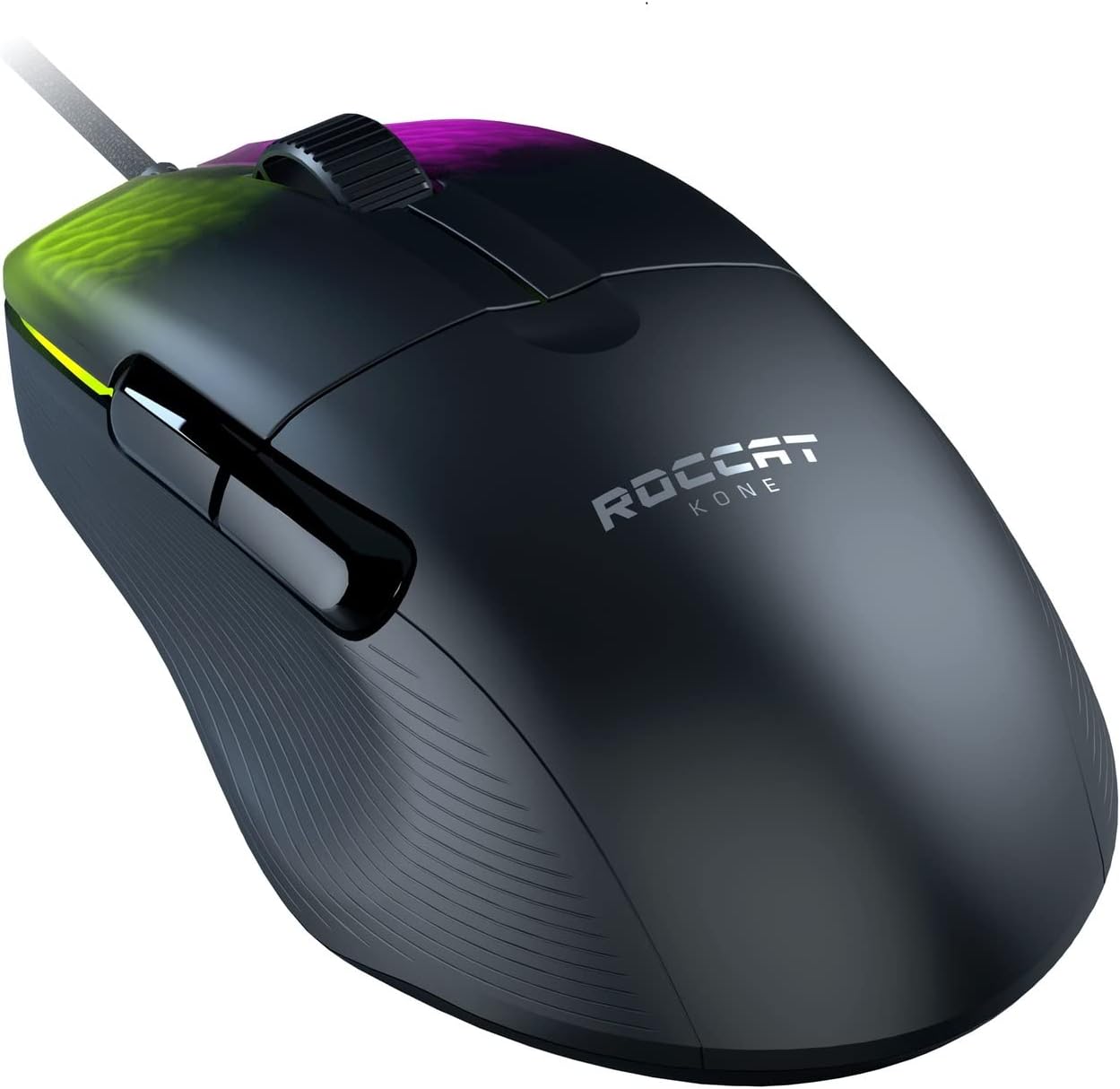
The Kone Pro is the mouse the Minecraft drag-click community keeps coming back to, and it’s the coating that earns it. Roccat’s performance coating is grippy and water-resistant, so the friction your finger needs stays consistent even as your hand warms up — the kind of mouse that drops barely any CPS between dry and sweaty hands. Pair that with Titan optical switches and an adjustable debounce in Roccat’s Swarm software and you have a genuinely high, repeatable click rate.
At 66g it’s light for an ergonomic shape, and the bionic shell is comfortable for long sessions. The honest con: the optical switches take a little practice to drag click compared with the Bloody below, and Roccat’s software is a download you’ll actually need to use to tune the debounce. For most people, this is the one.
Verdict: Buy it — the best all-round drag-clicking mouse; the grippy coating and tunable debounce do the work.
Bloody A70x — best for maximum CPS
If the only number you care about is clicks per second, the Bloody A70x is built for it. Its matte shell and Light Strike (LK) optical switches fire off an infrared beam with near-zero debounce, which is exactly why the Minecraft scene has chased records on Bloody mice for years. With grip tape it can push 50–100 CPS in a swipe.
The trade-offs are the usual Bloody ones: dated “Core” software, a generic ~80g right-handed shape, and budget-feeling build. You buy it for the switches, not the polish. The con: if you want comfort or modern software, the Kone Pro is the better daily mouse.
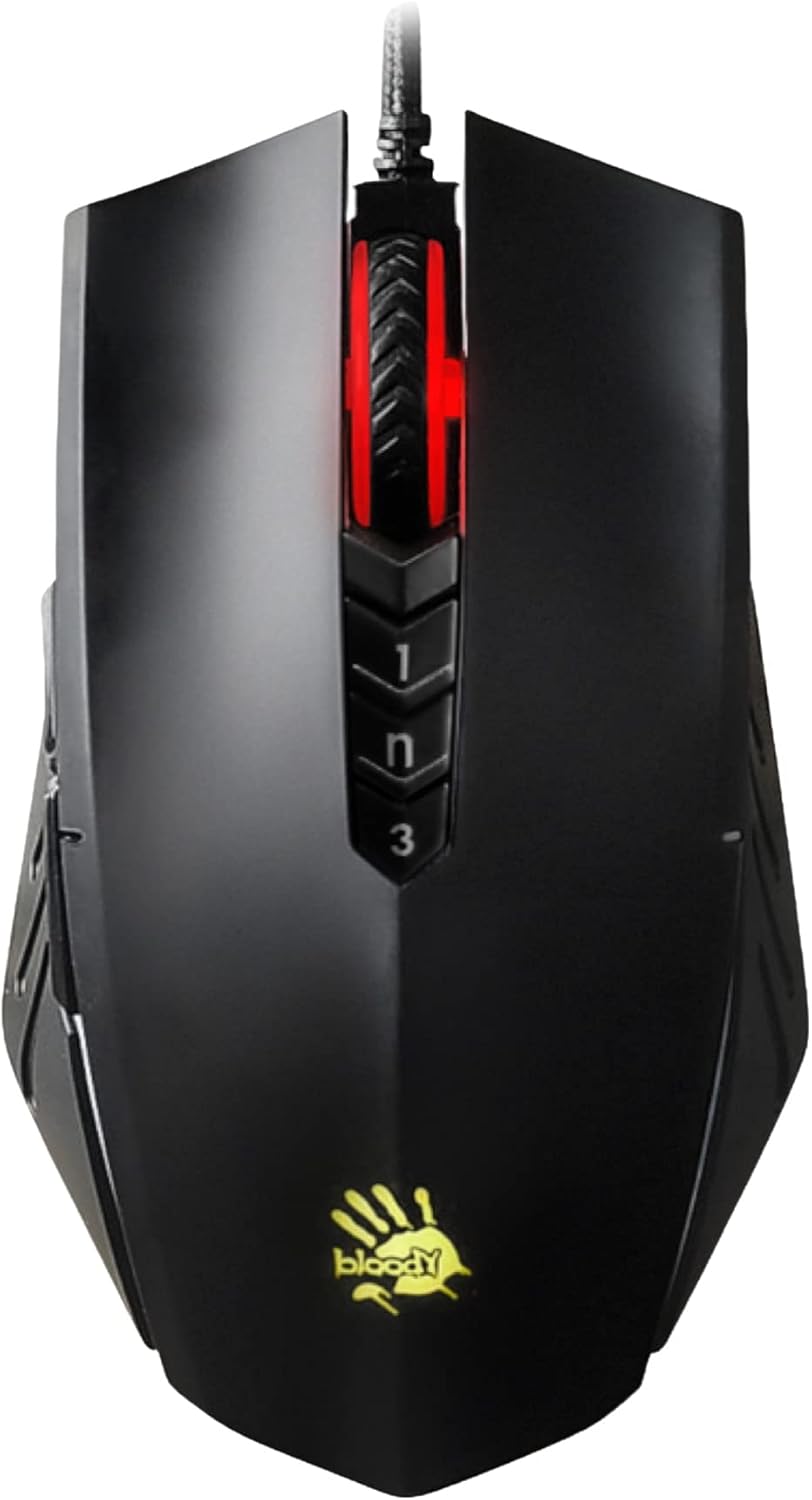
Verdict: It depends — buy it if max CPS is everything; skip it if you want comfort or modern software.
Glorious Model O 2 — best lightweight pick
Drag clicking is easier when the mouse isn’t fighting your hand, and at 59g the Model O 2 is the featherweight here. Its matte honeycomb shell gives your fingertip grip, the buttons are wide and flat, and Glorious’s software lets you drop the debounce as low as 4ms — the combination that makes fast, consistent drag clicks land instead of being filtered out.
The shell is sealed-feeling despite the holes, and the lightness helps with the rapid hand movement drag clicking encourages. The con: the switches are mechanical rather than optical, so under heavy daily drag clicking they’ll wear sooner than the Roccat optical picks. For lightness and low debounce, though, nothing here beats it. It’s also our top pick in the related butterfly-clicking guide if you do both.
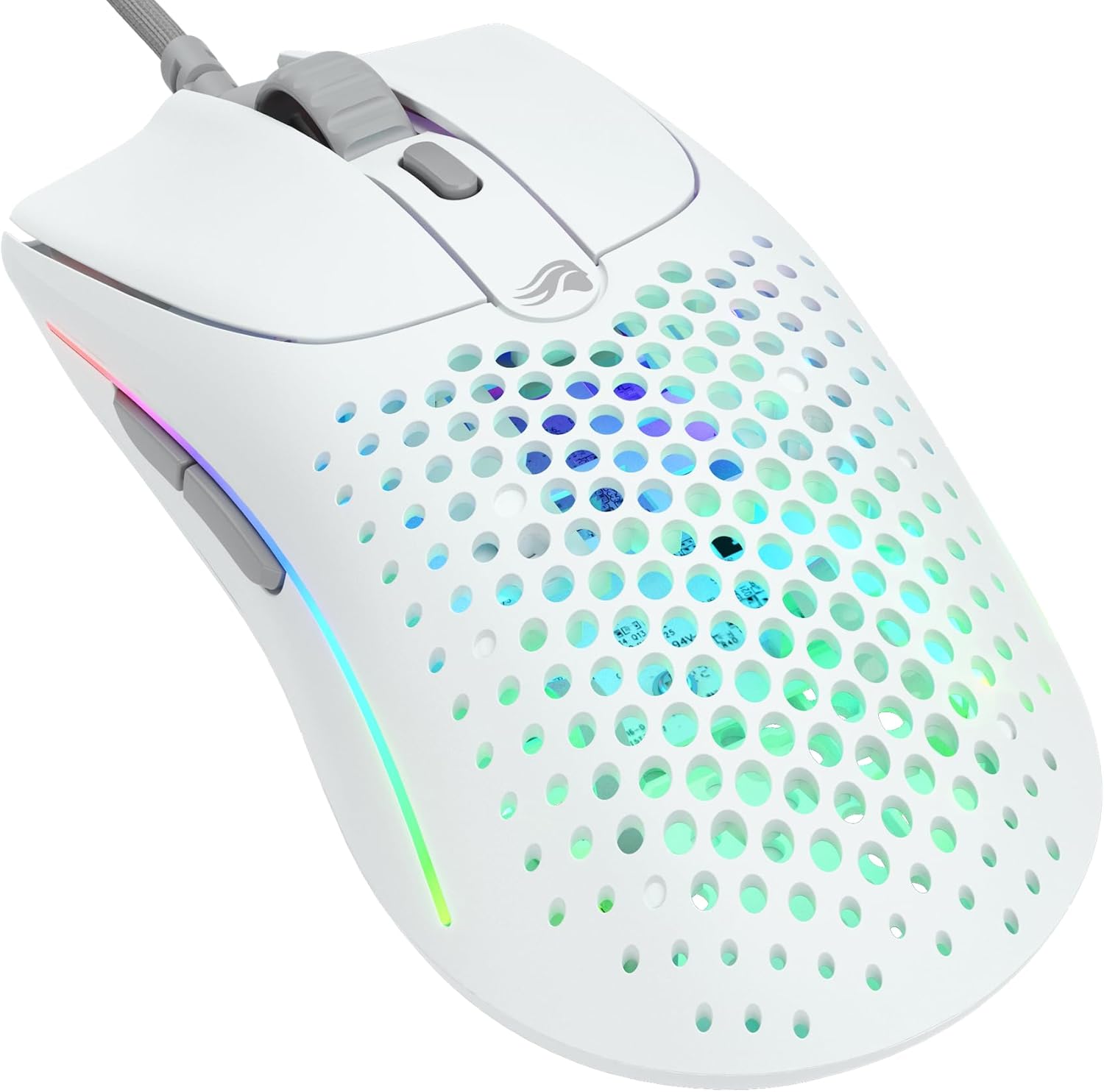
Verdict: Buy it — the best lightweight, low-debounce drag clicker; just expect mechanical switches to wear faster than optical.
Roccat Burst Pro — best for durability
Drag clicking is hard on switches, full stop. The Burst Pro is the pick that shrugs it off: Titan optical switches rated for 100 million clicks, with no physical contacts to pit or develop double-click chatter. Its bionic shell is grippy enough to drag click and it’s a crisp 68g.
It’s the most chatter-proof mouse here over the long haul, and a great everyday mouse besides. The con: like all optical switches it takes slightly more practice to coax into drag clicking than a Bloody, and its top CPS ceiling is a touch lower in exchange for that longevity. If you click hard for hours, the trade is worth it.
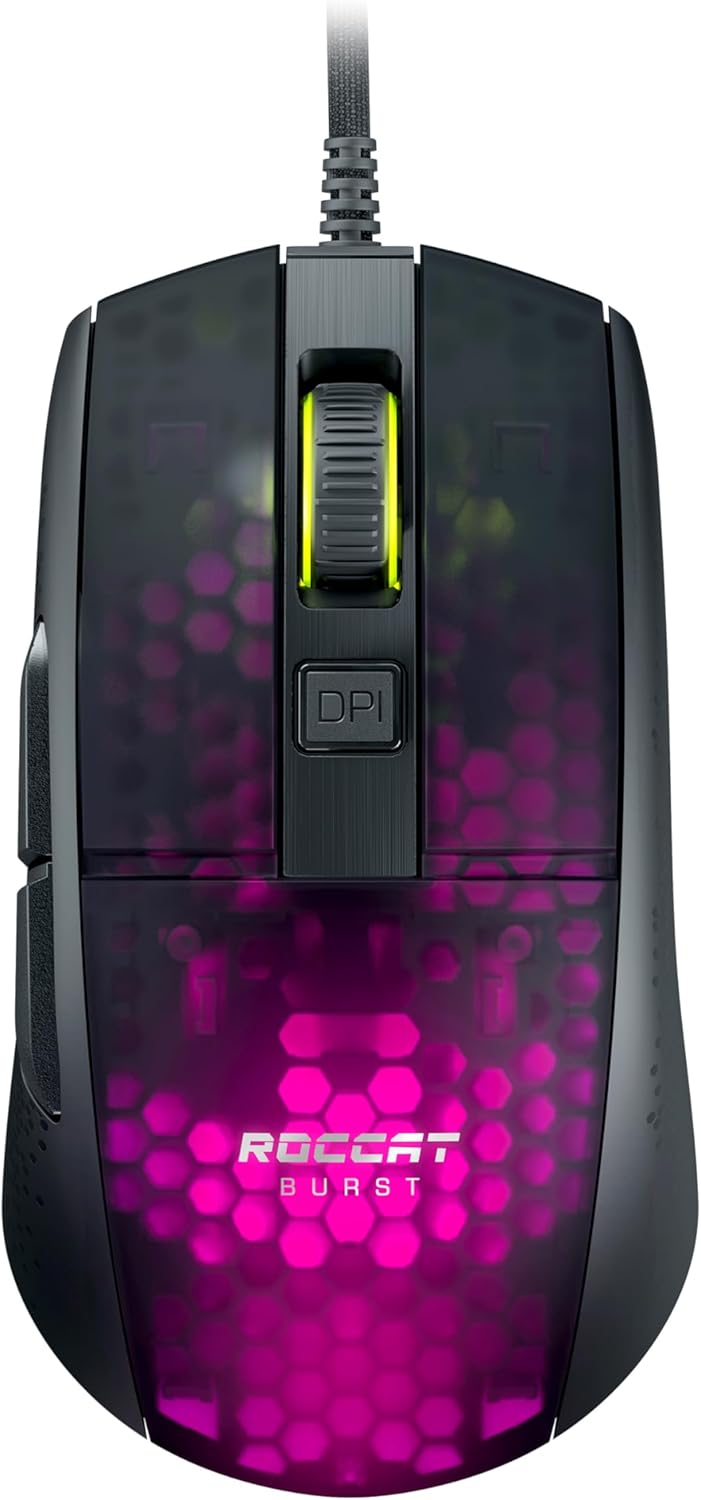
Verdict: Buy it — the best pick if longevity matters most; consistent clicks for years without switch decay.
Logitech G203 — best budget pick
You don’t need to spend much to start drag clicking, and the G203 is the reliable floor. Its matte finish has genuine grip, the buttons are flat enough to swipe across, and it’s the highest-rated mouse on this list — 4.6 stars across 19,000+ ratings. Add a strip of grip tape and it drag clicks far better than its price suggests.
The caveat: mechanical switches mean heavier daily drag clicking will wear it sooner than the optical picks, and there’s no adjustable debounce, so your ceiling is lower. For learning the technique or casual use, it’s unbeatable value. It’s also a favourite in our butterfly-clicking roundup.
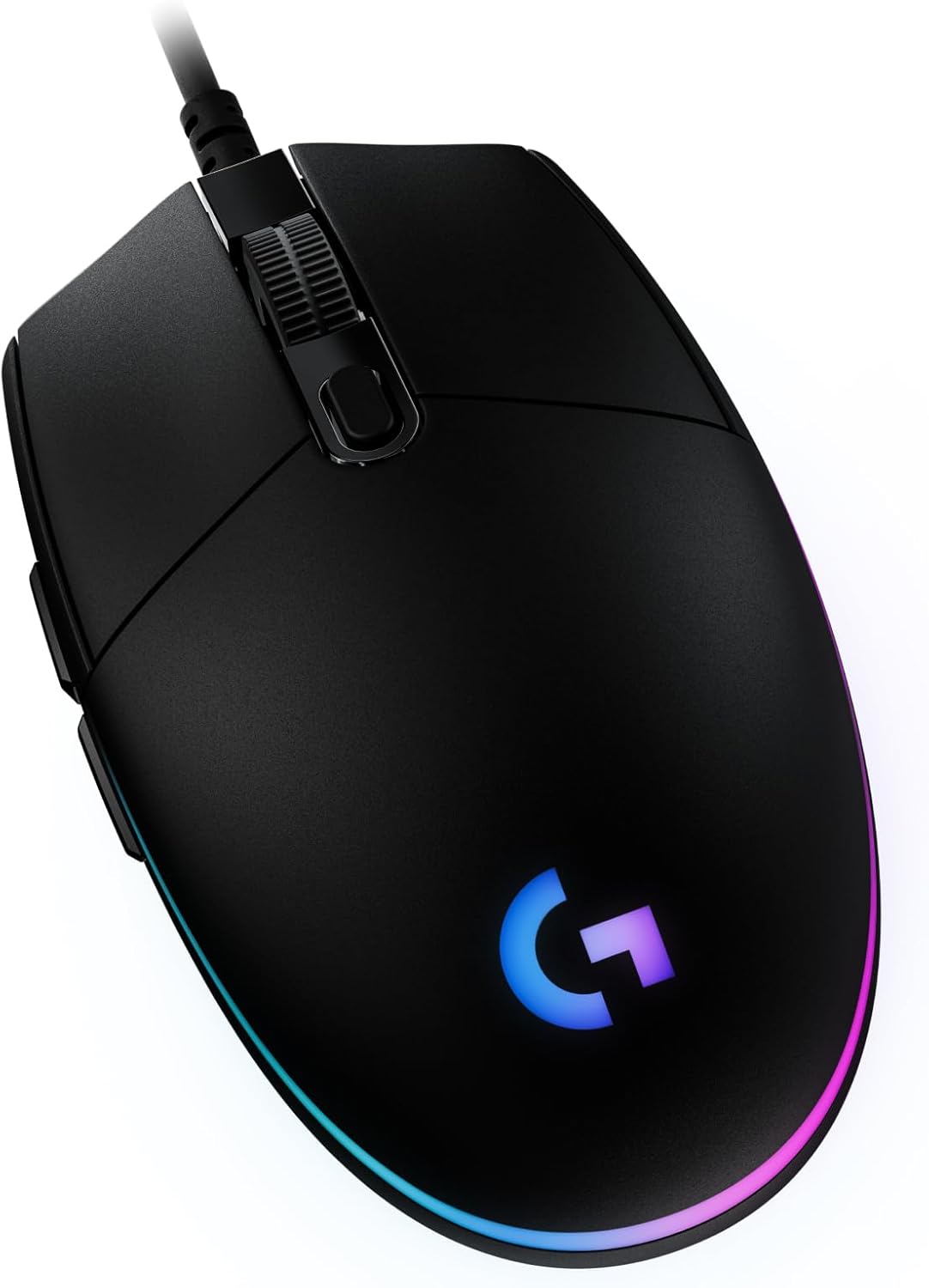
Verdict: Buy it — the best budget entry point; pair it with grip tape and know the switches wear faster than optical.
Razer DeathAdder V2 — best for palm grip and larger hands
Big-handed palm grippers struggle with the small ambidextrous shapes most drag clickers use. The DeathAdder V2 fixes that with a tall ergonomic hump and a matte shell plus rubberized side grips that give you control across the whole hand. The optical switches keep clicks reliable, and the grippy surface takes grip tape well for drag clicking.
At 82g it’s heavier than the ultralights here, which palm grippers usually prefer for stability. The con: it’s right-hand-only, and optical switches need a bit more practice to drag click than the Bloody’s. If the small mice cramp your hand, this is the comfortable answer.
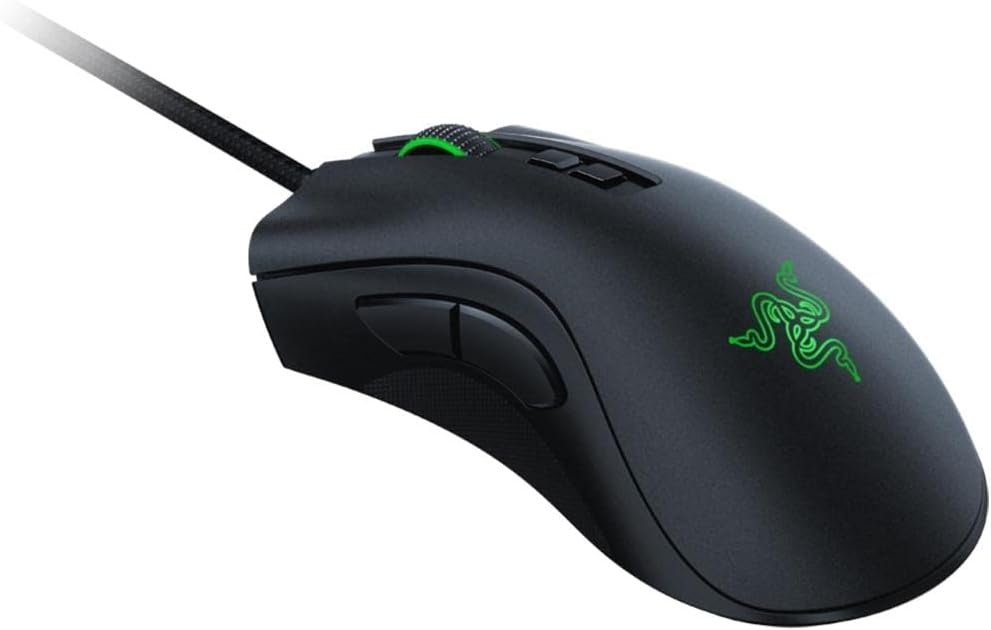
Verdict: Buy it — the best palm-grip drag clicker for larger hands; right-handers only.
How to choose a mouse for drag clicking
Drag clicking is like a violinist’s bow on a string: it’s the friction between the bow hair and the string that makes the note, not how hard you press. A grippy matte coating is your bow hair — it catches your fingertip and turns one swipe into a string of clicks. A glossy shell is a bow with no rosin: nothing happens. So buy for friction first. Here’s the order that matters:
- Coating grip, above all. A matte, slightly rough, water-resistant coating is what makes drag clicking possible. Glossy = no drag clicks. Grip tape can rescue a borderline shell.
- Adjustable, low debounce. Drag clicks fire dozens of micro-inputs; if the debounce is high they get filtered out. The Kone Pro and Model O 2 let you drop it to ~4ms — the single most underrated spec.
- Switch durability. Drag clicking wears switches fast. Optical switches (Titan, Light Strike) last far longer than mechanical under the strain — see whether this kind of clicking breaks your mouse.
- Weight and shape for your grip. Lighter mice are easier to reposition mid-swipe; match the shape to claw, fingertip, or palm.
Two practical notes. Grip tape is the cheapest upgrade you can make — a few dollars turns most matte shells into reliable drag clickers. And know the cost: drag clicking can void warranties and shortens switch life, so don’t do it on a mouse you can’t afford to replace. For more shapes and grips, browse our full gaming mouse guides.
Frequently asked questions
What mouse is best for drag clicking?
For most people the Roccat Kone Pro is the best choice, thanks to a grippy performance coating and an adjustable debounce that together make consistent high CPS easy. If you want the highest possible click rate, the Bloody A70x with Light Strike optical switches is purpose-built for it; for the longest lifespan, the Roccat Burst Pro’s 100-million-click optical switches hold up best.
How does drag clicking work?
Drag clicking uses friction. You drag your fingertip across the mouse button so the textured coating creates tiny vibrations, each of which the switch registers as a separate click — letting one swipe produce dozens of clicks. That’s why a grippy matte coating is essential: a smooth, glossy shell doesn’t generate the friction and won’t drag click.
Does drag clicking break your mouse?
It accelerates wear. The rapid micro-inputs put far more strain on the switches than normal clicking, so mechanical switches especially can start double-clicking or failing sooner, and it can void your warranty. Choosing a mouse with durable optical switches (like the Roccat picks here) greatly reduces the risk — we cover the lifespan details in our dedicated guide.
What is a good CPS for drag clicking?
Casual drag clickers reach 30–50 CPS, while skilled players on a well-suited mouse hit 50–100 CPS in a swipe. The mouse and grip tape matter enormously: a grippy matte shell with low debounce, like the Kone Pro or Bloody A70x, makes far higher and more consistent rates achievable than a glossy office mouse.
Is drag clicking allowed in Minecraft?
Drag clicking is a manual technique, so most servers permit it, but the rules vary. Many servers ban autoclickers and macros, and some treat extreme CPS from drag clicking as a grey area or restrict it. Always check the specific rules of the server you play on before relying on it competitively.
Can you drag click on any mouse?
No — it depends almost entirely on the coating. A grippy matte shell drag clicks well; a smooth, glossy one usually won’t, no matter the sensor or switches. Some modern mice are also “drag-click patched” in firmware to filter the rapid inputs. The models in this guide were chosen because their coating and switches still work for the technique.