
Updated June 2026
Butterfly clicking is simple to describe and brutal on hardware: you alternate two fingers on a single mouse button to push your click rate from a normal 6–8 CPS up to 15–25. Done right, it wins Minecraft PvP fights. Done on the wrong mouse, it does something else — it triggers double-click failure, where one press registers as two, your blocks misplace, and within months the switch is chattering and the mouse feels broken.
So the mouse matters more here than for almost any other use. Three specs decide whether a mouse survives and thrives at butterfly clicking: the switch type (optical beats mechanical for this), wide flat buttons your two fingers can share, and an adjustable debounce time so fast double-taps still register as legal single clicks. Get those right and you hit high CPS consistently without killing the mouse.
TechnoQia is reader-supported: if you buy through the Amazon links below we earn a small commission at no extra cost to you, and it never changes the rankings. Every pick here was chosen on switch type, button shape, and durability under rapid clicking — the things that actually matter for this technique. Ratings and review counts are pulled live from Amazon at the time of this update.
One honest note before we start: butterfly clicking is a manual technique most servers allow, but autoclickers and “double-click” exploits are bannable on many of them — check your server’s rules. And clicking this fast does add wear; we cover how much in our explainer on whether butterfly clicking breaks your mouse.
- Best for most clickers: the Glorious Model O 2 — wide split buttons and an adjustable 4ms debounce make 20+ CPS easy.
- Highest CPS ceiling: the Bloody A70x — Light Strike optical switches built specifically for rapid clicking.
- Cheapest that still clicks well: the Logitech G203 — flat, wide buttons on a budget.
The butterfly-clicking shortlist, compared
Six mice, scored on what decides clicking performance — switch type, button shape, and weight. Product names link to Amazon.
| Mouse | Switch type | Weight | Rating | Best for |
|---|---|---|---|---|
| Glorious Model O 2 | Mechanical (80M, 4ms debounce) | 59g | 4.4 ★ | Most people, wide buttons |
| Bloody A70x | Light Strike optical | ~80g | 4.5 ★ | Maximum CPS ceiling |
| Roccat Burst Pro | Titan optical (100M) | 68g | 4.5 ★ | Durability |
| Razer Viper Mini | Optical | 61g | 4.6 ★ | Light + budget, small hands |
| Logitech G203 | Mechanical | 85g | 4.6 ★ | Cheapest solid pick |
| Razer DeathAdder V2 | Optical | 82g | 4.5 ★ | Palm grip, larger hands |
TechnoQia · butterfly-clicking mouse map
Which butterfly-clicking mouse is right for you?
Your goal decides the priority; one switch-or-button spec decides the pick.
Decider: wide split buttons plus a software debounce as low as 4ms for easy 20+ CPS.
Decider: Light Strike optical switches with a 0.2ms response, engineered for rapid clicking.
Decider: Titan optical switches rated to 100M clicks — no metal contacts to wear or chatter.
Decider: 61g with optical switches that never double-click, on a budget.
Decider: optical switches in a tall ergonomic shell built for full palm contact.
Glorious Model O 2 — best for most butterfly clickers
Ask the Minecraft PvP community what they click with and the Model O 2 comes up first. The reason is the split-button design with wide, flat surfaces — there’s room for your index and middle fingers to alternate without fighting each other — and Glorious’s software lets you drop the debounce time as low as 4ms, which is what makes those fast double-taps register as clean, legal clicks instead of being filtered out. At 59g it’s light enough to move while you spam.
Its switches are mechanical (rated 80M clicks), not optical, so it’s not the most chatter-proof choice on this list long-term — but the button shape and debounce control make it the easiest mouse here to actually hit 20+ CPS on. The con: wired, it’s pricier than the budget picks. For most people learning or maining butterfly clicking, it’s the one.
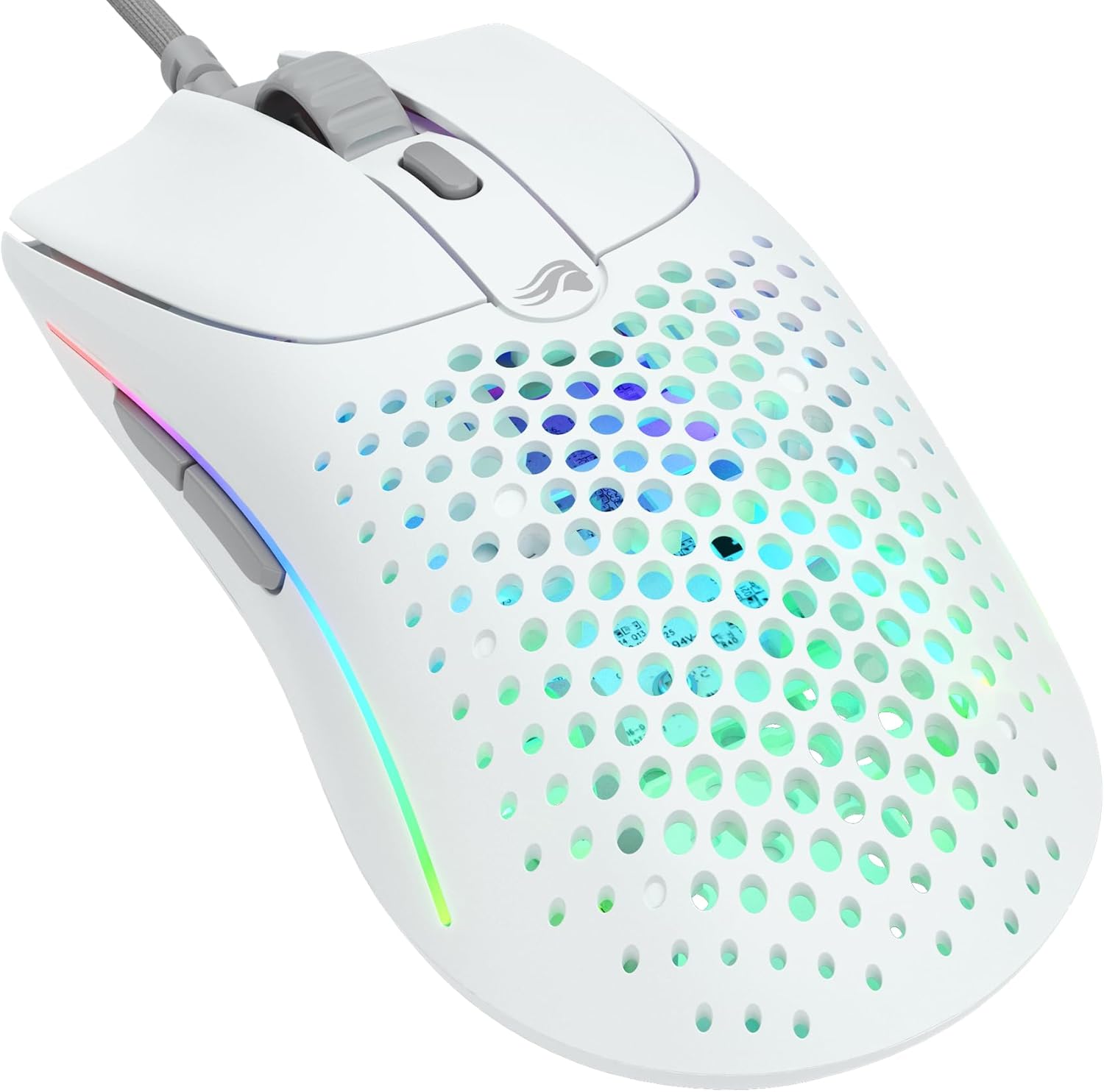
Verdict: Buy it — the best all-round butterfly-clicking mouse; the wide buttons and adjustable debounce are worth the premium.
Bloody A70x — best for maximum CPS
If your only goal is the highest click rate your fingers can produce, the Bloody A70x is built for it. Its Light Strike (LK) optical switches use an infrared beam instead of metal contacts, with a 0.2ms response and effectively zero debounce delay — which is exactly why the Minecraft clicking scene has used Bloody mice for years to chase record CPS. There’s no double-click failure because there’s nothing to bounce.
The trade-offs are real: Bloody’s “Core” activation software is clunky and dated, the shape is a fairly generic ~80g right-hander, and the build feels its price. But on raw clicking performance nothing here beats it. The con: you’re buying it for the switches, not the comfort or the software.
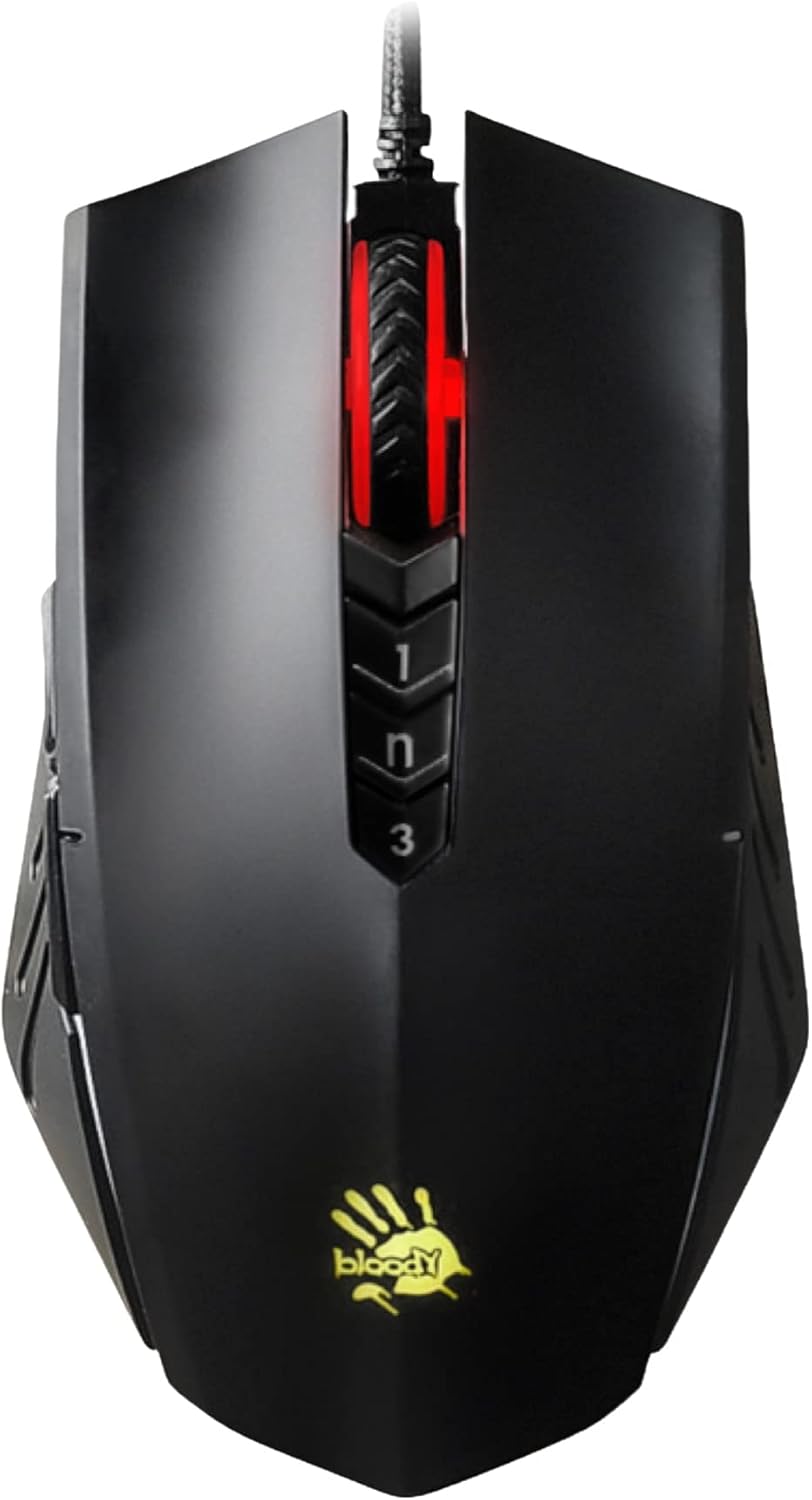
Verdict: It depends — buy it if max CPS is the only thing you care about; skip it if you want modern software or a refined shape.
Roccat Burst Pro — best for durability
Butterfly clicking’s dirty secret is wear: the faster you click, the sooner a normal switch starts double-clicking. The Burst Pro sidesteps that with Titan optical switches rated for 100 million clicks — an optical actuation with no physical contact points to pit or bounce. If you click hard for hours daily, this is the one that won’t be chattering in six months.
It’s also a genuinely good mouse otherwise: 68g, a semi-transparent bionic shell, and a crisp Titan scroll wheel. The optical switches are slightly harder to “force” into the rapid double-actuation some clickers chase, so your pure CPS ceiling is a touch lower than the Bloody — but your consistency and lifespan are higher. The con: that same trait makes it less of a record-chaser.
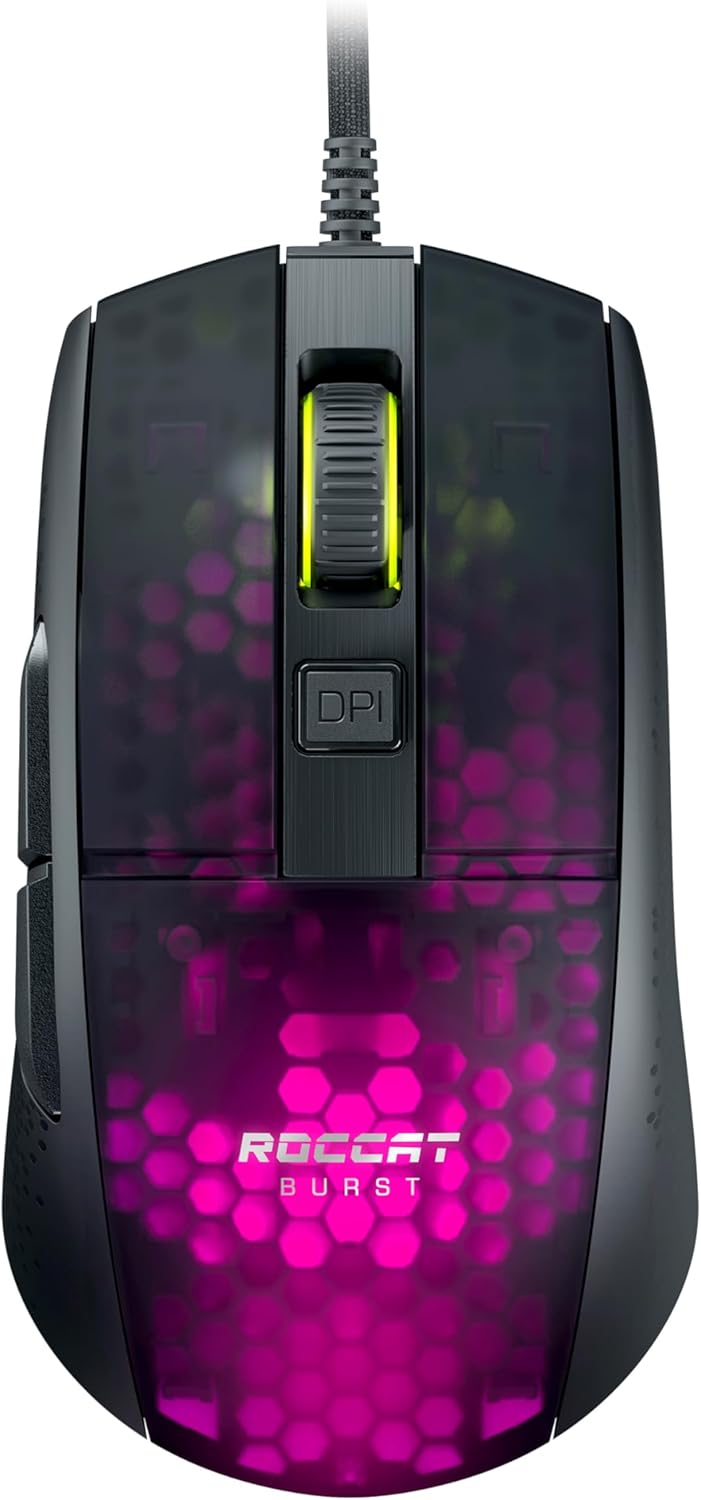
Verdict: Buy it — the best pick if longevity matters most; consistent CPS for years without the double-click decay.
Razer Viper Mini — best light + budget pick
The Viper Mini packs optical switches — so no double-click failure — into a 61g body on a budget. That combination is hard to beat for a clicker on a budget, and the light weight means your whole hand stays loose while you spam. It’s the highest-rated mouse on this list, 4.6 stars across 21,000+ ratings.
The buttons are a touch narrower than the Model O 2’s, so the two-finger alternation takes a little more practice, and at 118mm with a small body it suits claw and fingertip grips and smaller hands best — see our small-hands mouse guide if that’s you. The con: bigger palm-grippers will want the DeathAdder below. For value, though, it’s superb.
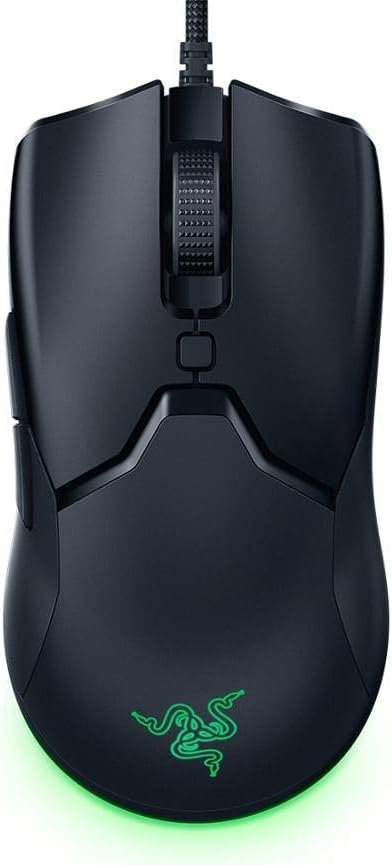
Verdict: Buy it — the best cheap optical clicker; ideal for smaller hands and anyone who doesn’t want to overspend.
Logitech G203 — cheapest solid pick
If you want to try butterfly clicking without spending much, the G203 is the floor that still works. Its buttons are flat and reasonably wide, which is the main thing the technique needs, and it’s everywhere. It shares the top rating here — 4.6 stars across 19,000+ ratings — because it’s a genuinely reliable little mouse.
The honest caveat: the G203 uses mechanical switches, so under heavy daily butterfly clicking it’s more prone to developing double-click chatter over time than the optical picks. For casual or learning use it’s perfect value; if you click competitively for hours, step up to the Roccat or Bloody. It’s also a strong shout if you’ve read our drag-clicking mouse guide and want one mouse for both.
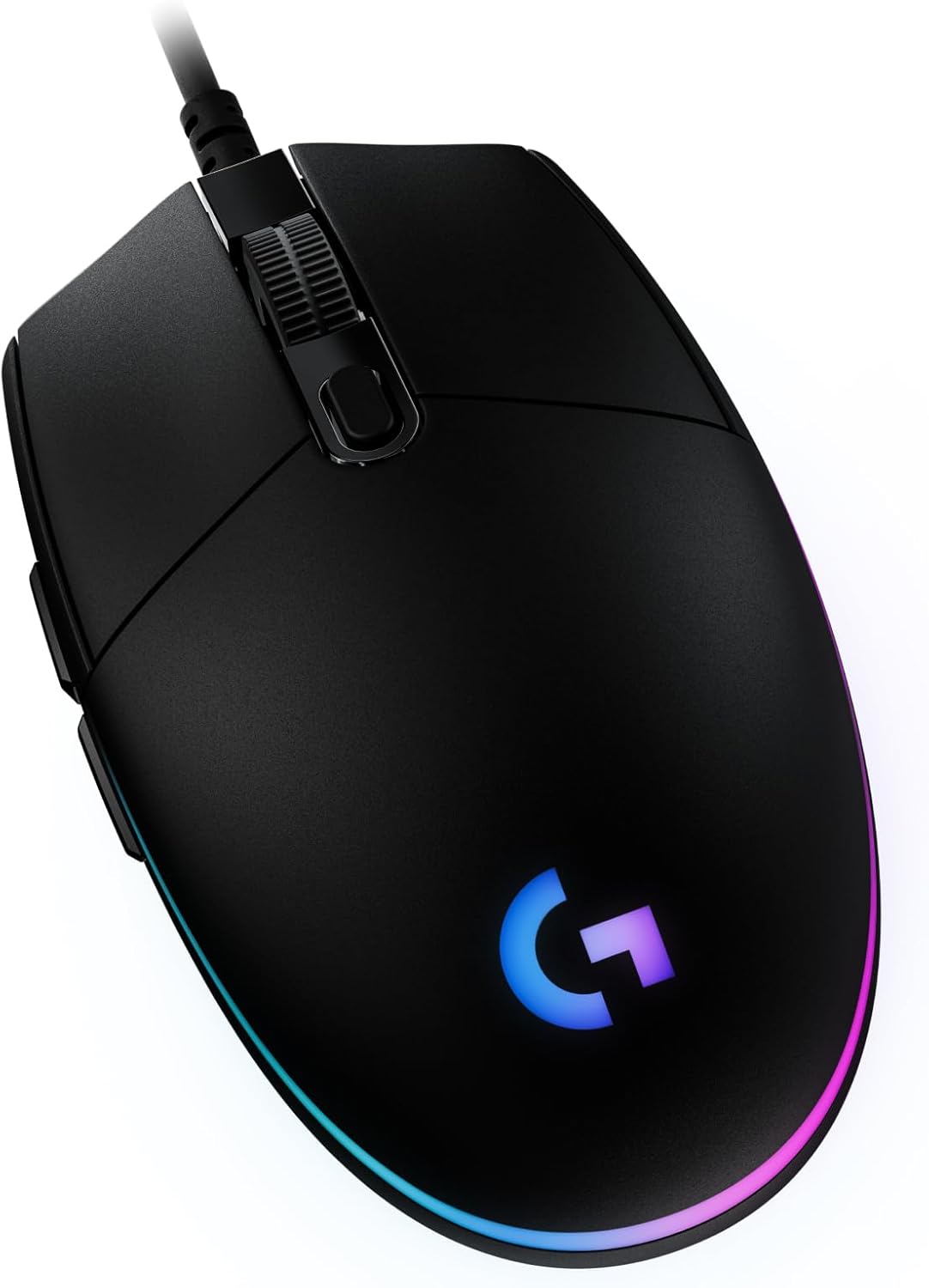
Verdict: Buy it — the best budget entry point; just know mechanical switches wear faster under heavy clicking than the optical picks.
Razer DeathAdder V2 — best for palm grip and larger hands
Most butterfly-clicking favourites are small, light, ambidextrous shapes — bad news if you have big hands and palm-grip. The DeathAdder V2 fixes that: a tall ergonomic hump that fills the palm, paired with optical switches so you still get the no-double-click reliability the technique needs. It’s the comfortable choice for long sessions if the small mice cramp your hand.
At 82g it’s heavier than the ultralights here, which palm-grippers generally prefer for stability. The buttons are well-shaped for two-finger alternation once you adjust. The con: it’s right-hand-only and not as featherlight as the Model O 2 or Viper Mini, so pure speed-chasers may prefer those.
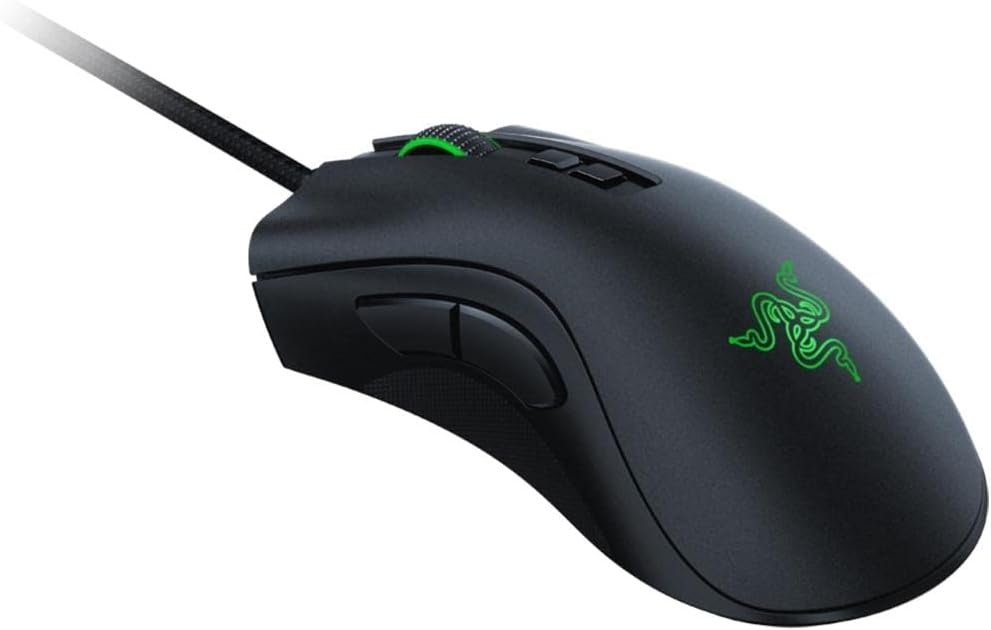
Verdict: Buy it — the best palm-grip clicker for larger hands; optical reliability without giving up comfort.
How to choose a mouse for butterfly clicking
Think of the switch under your mouse button like a doorbell. A mechanical switch is an old metal-contact bell: press it fast enough and the contacts “bounce,” ringing twice for one push — that’s the double-click failure that ruins fast clicking and wears the switch out. An optical switch is a modern light-beam sensor: the beam either breaks or it doesn’t, so it can’t bounce and there are no contacts to wear. That’s why optical wins for this. Here’s what to weigh:
- Switch type first. Optical (Light Strike, Titan, Razer optical) gives you no double-click failure and the longest life. Mechanical can click beautifully — the Model O 2 proves it — but wears faster under heavy spamming.
- Button width and shape. Butterfly clicking needs room for two fingers on one button. Flat, wide buttons (Model O 2, G203) are far easier to alternate on than narrow, curved ones.
- Adjustable debounce time. Lower debounce (down to ~4ms on the Model O 2) lets rapid taps register instead of being filtered as accidental — the single most underrated spec for high CPS.
- Weight. A lighter mouse keeps your hand relaxed while you spam, which both raises CPS and reduces fatigue.
And the question everyone eventually asks: will this wreck my mouse? Fast clicking does add wear, but how much depends almost entirely on switch type — optical switches shrug it off, mechanical ones don’t. We break down the real lifespan math in does butterfly clicking break your mouse. For more shapes and grips, browse our full gaming mouse guides.
Frequently asked questions
What mouse is best for butterfly clicking?
For most people the Glorious Model O 2 is the best all-round choice, thanks to its wide split buttons and an adjustable debounce time as low as 4ms that makes hitting 20+ CPS easy. If you want the highest possible click rate, the Bloody A70x with Light Strike optical switches is built for it; if durability matters most, the Roccat Burst Pro’s 100-million-click optical switches last longest.
Does butterfly clicking break your mouse?
It adds wear, but how much depends on the switch type. Mechanical switches can develop double-click “chatter” over months of heavy butterfly clicking, while optical switches (no physical contacts) are far more resistant and often outlast normal use. Choosing an optical mouse is the simplest way to avoid the problem — we cover the details in our dedicated guide on whether butterfly clicking breaks your mouse.
Are optical switches better for butterfly clicking?
Yes, for two reasons. Optical switches use a light beam rather than metal contacts, so they can’t “bounce” into a double-click during rapid clicking, and with no contacts to wear they last far longer under the strain. That’s why purpose-built clicking mice like the Bloody A70x and Roccat Burst Pro use optical switches.
How many CPS can you get butterfly clicking?
Most people reach 12–16 CPS with practice, and skilled clickers hit 20–25 CPS on a well-suited mouse. The mouse matters: a wide-buttoned, low-debounce model like the Model O 2 or an optical clicker like the Bloody A70x makes higher, more consistent rates achievable than a generic office mouse.
Is butterfly clicking allowed in Minecraft?
Butterfly clicking itself is a manual technique that most servers permit, since you’re physically clicking. However, many servers ban autoclickers and software that simulates clicks, and some restrict “double-click” exploits that register extra inputs. Always check the specific rules of the server you play on before relying on it.
Can any mouse butterfly click?
Technically yes, but results vary hugely. A mouse with narrow, stiff buttons and high debounce will fight you and may double-click-fail, while one with wide flat buttons, optical switches, and adjustable debounce makes the technique easy and consistent. That difference is exactly what separates the picks in this guide from a basic office mouse.